
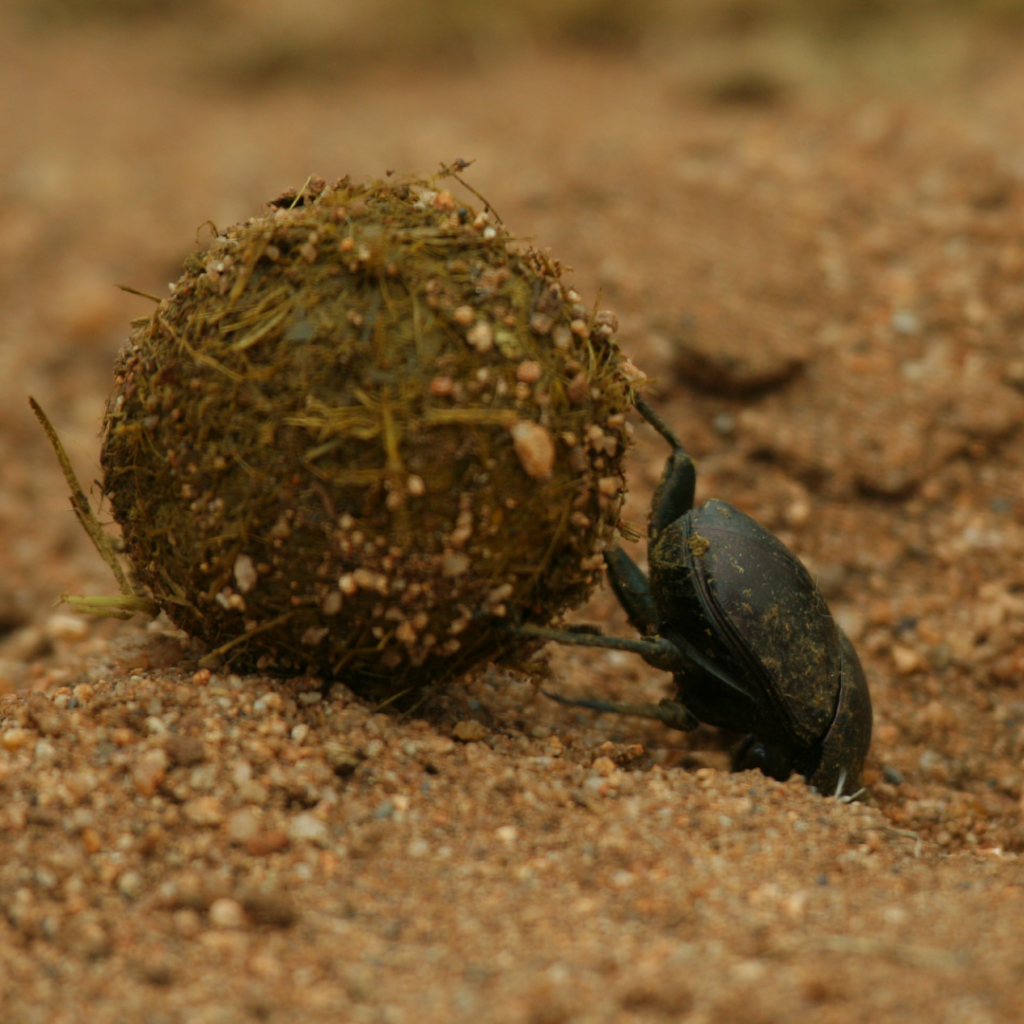
At Nambiti Hills Private Game Experience, we’re lucky enough to be surrounded by a myriad of interesting creatures both great and small. On the latter side of the scale, we’re particularly fascinated by the humble dung beetle. Although a rather iconic bug, many are unaware of its true power but we’re here to change all of that. Here are a few interesting facts about the dung beetle.
You get four types
Believe it or not, dung beetles can be split into four distinct groups based on their habits. These include:
• Telecoprid – Who roll balls of dung.
• Endocoprid – Who lay their eggs in a pile of dung.
• Paracoprid – Who burrow below a pile of dung.
• Kleptocoprid – Who steal balls of dung from Telecoprids.
They’re fond of warmth
You might be able to find dung beetles on almost every continent, they cannot thrive in cold climates. It’s why you’ll never hear of any in Antarctica.

They play a vital role in the environment
As coprophages (eaters of faeces), they help clean up the bush. Wherever dung isn’t used for food or laying of eggs, it is buried underground. This provides fertiliser for the soil, allowing for healthier growth of vegetation. Their removal of dung also means fewer flies, which the animals of the bush are certainly thankful for.
You get different colours
Most of us picture the classic black dung beetle but you actually get a variety of colours. These include copper and even blue!
Why do they lay their eggs in dung?
The dung provides a safe space for the eggs and delivers nutrients for when they hatch. Once hatched, larvae eat the dung around them in order to exit and make their way out into the world.
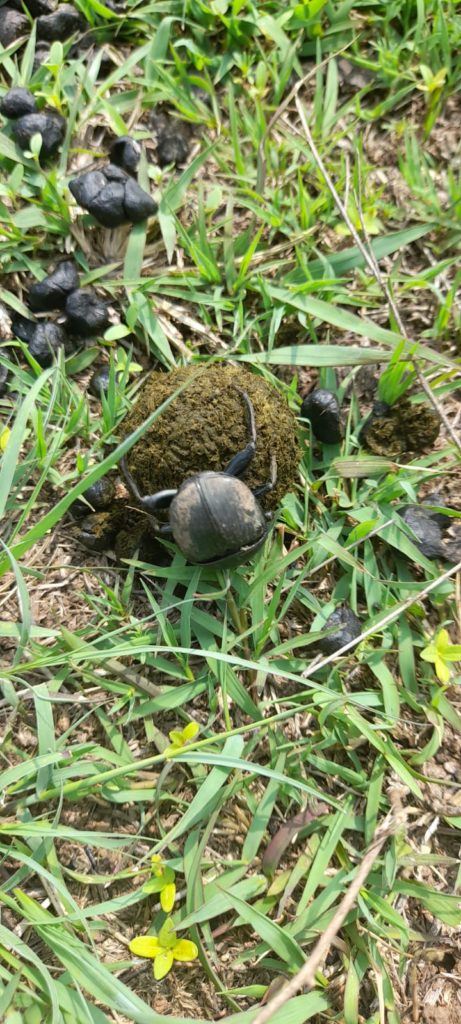
See them up close
Why not marvel at the wonders of the dung beetle with an escape to Nambiti Hills Private Game Experience? For more on how you can book your stay, email reservations@nambitihills.com